How Can the Right Stand Mixer Save You Time During the Holiday Baking Season?

May 28, 2026

In the baking industry, the holiday season—whether it is Thanksgiving, Christmas, or the New Year—signals a massive surge in orders that pushes kitchen capacity to its absolute limits. For traditional bakery chains, central kitchens, and boutique pastry studios catering to the high-end market, maximizing production within a strictly limited timeframe is the ultimate commercial challenge. The limitations of manual labor or traditional, underpowered equipment become glaringly obvious when faced with a dense, relentless stream of orders. When processing high-density, large-batch dough recipes, upgrading your core equipment is the only sustainable way to break through this production bottleneck. Integrating a high-performance Heavy Duty Dough Mixer into your daily operations can fundamentally reshape your kitchen's workflow. By leveraging powerful torque and a stable planetary mixing system, a process that once took hours of manual kneading and gluten development can be condensed into mere minutes, winning your team a crucial time window for shaping, proofing, and baking.

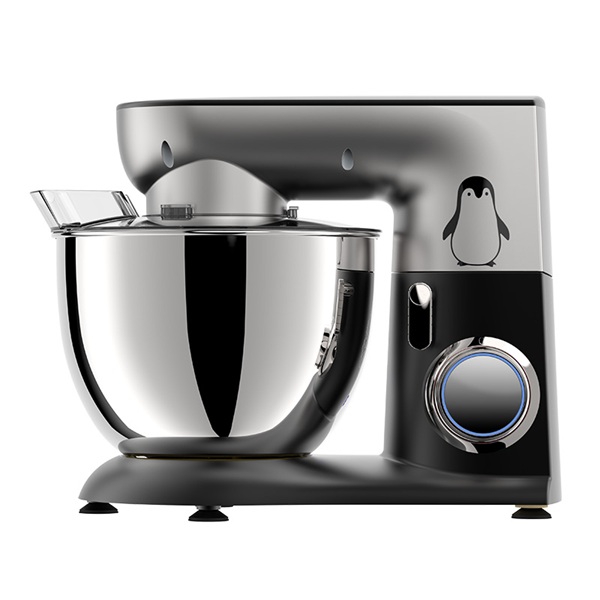
6-Speed Stand Mixer

The Hidden Time Costs in Commercial Baking

When faced with a sudden influx of holiday orders, many bakery owners instinctively try to solve the problem by hiring temporary staff or extending operating hours. However, in commercial operations, rising labor costs and the inevitable increase in defect rates caused by employee fatigue quickly erode profit margins. More importantly, standard mixing equipment is notoriously prone to thermal shutdown when subjected to long, intense periods of continuous operation. Once a machine overheats and forces a shutdown during peak production hours, the entire assembly line grinds to a halt. The downtime spent waiting for a motor to cool is an incredibly expensive commercial loss.

Efficient mixing equipment does more than just speed up the processing of a single batch of ingredients; it guarantees the stability of continuous operation. Commercial-grade mixers are typically equipped with high-power pure copper motors and all-metal gear transmission systems. Compared to the plastic gears or low-power motors found in standard domestic mixers, commercial units deliver sustained torque that never fades. Whether you are mixing large batches of brioche dough, heavy pound cake batter, or stiff biscotti, the equipment maintains a constant speed. It will not slow down or overheat as the dough resistance increases, ensuring that the mixing time for every single batch remains precisely on schedule.

How Speed and Torque Control Transform Overall Efficiency

Beyond capacity and durability, the precision of speed control is a core metric that determines whether a bakery kitchen can operate efficiently during the holiday rush. Different baked goods require vastly different mixing speeds and strengths. From the low-speed folding of flour and the medium-speed creaming of butter, to the high-speed whipping of egg whites and heavy cream, losing control of speed at any stage can ruin the product, leading to an irreversible waste of both time and expensive raw materials. Utilizing a professional 6-Speed Stand Mixer gives bakers precise, nuanced control over their craft. Its optimized six-speed design, combined with a large-capacity SUS304 mixing bowl, allows operators to shift speeds instantly according to the exact requirements of a recipe. This efficient transitioning between gears ensures optimal dough texture under heavy loads and creates seamless connections between different preparation steps.

In practical production scheduling, the advantage of multi-gear control is primarily reflected in the following areas:

  • Speeds 1 and 2 (Low-Speed Incorporation): Essential for initially combining dry flours with wet liquids. The robust low-speed torque easily overcomes the initial resistance of large dough batches, preventing flour from splashing out of the bowl and eliminating the extra time needed to clean the workstations.
  • Speeds 3 and 4 (Medium-Speed Development): This is the critical stage for developing the gluten network (achieving the windowpane test) or creaming butter. Constant medium-speed rotation allows the ingredients to reach the ideal emulsified or elastic state in the shortest possible time.
  • Speeds 5 and 6 (High-Speed Aeration): Designed for egg whites, mousse bases, or meringues that require a massive incorporation of air. High-speed rotation, paired with the planetary mixing track, completes aeration in a fraction of the time, resulting in a highly stable and finely structured finished product.

By utilizing precise speed divisions, the back-of-house team can establish strict Standard Operating Procedures (SOPs). For instance, a holiday-exclusive cake batter might require exactly one minute of mixing on speed one, four minutes on speed three, and two minutes of finishing on speed five. This standardized time management eliminates the uncertainty of relying purely on human estimation, making production efficiency fully quantifiable.

The Commercial Economics of Capacity and Materials

During the golden window of holiday baking, single-batch throughput directly dictates the day's revenue. An undersized mixing bowl forces the kitchen to split a single large order into four or five separate mixing cycles. Every repeated cycle of scaling ingredients, loading, mixing, and washing exponentially wastes time.

Deploying a large-capacity mixing bowl (such as 6.5 liters or larger), particularly one made from food-grade SUS304 stainless steel, yields significant economies of scale. SUS304 stainless steel not only meets the strictest food safety and hygiene standards, but its smooth interior surface also effectively prevents dough and batter from sticking. This means that pouring out the mixture is a clean, seamless process, drastically reducing the time spent scraping the bowl and washing up between batches. Furthermore, metal materials possess excellent thermal conductivity and temperature retention properties. In hot, busy kitchens, dough is highly susceptible to premature fermentation caused by the friction heat generated during mixing. A large stainless steel bowl allows bakers to easily place ice packs underneath or use ice water for mixing, effectively delaying the rise in dough temperature. This ensures the dough finishes mixing in its optimal state, avoiding the massive time loss of having to throw away and restart a ruined batch.

Simultaneously, die-cast aluminum housing or all-metal body designs provide substantial, grounded weight to the machine. When operating at high speeds or kneading highly elastic doughs, a solid body effectively dampens vibrations, preventing the machine from "walking" across the counter or tipping over. Employees do not need to stand guard next to the machine; they can be redeployed to simultaneously handle oven preheating, mold preparation, or product packaging. This creates true human-machine collaboration, maximizing both spatial and temporal efficiency.

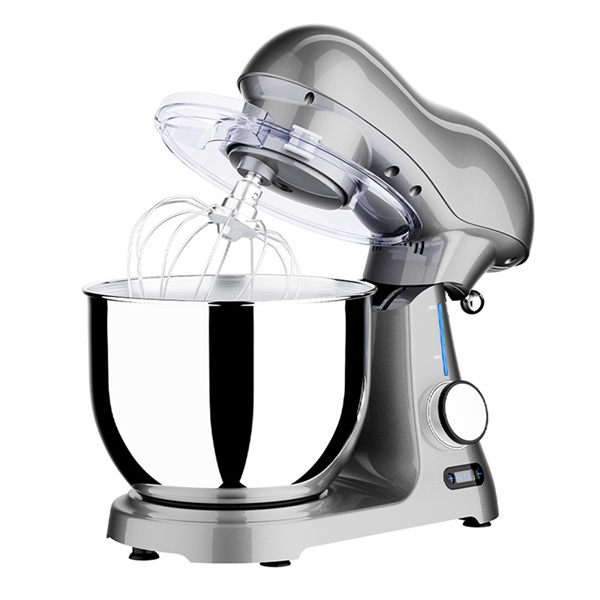
Multifunctional Stand Mixer

Reshaping Changeover Times Through Multifunctionality

Modern commercial baking competition has long moved past the production of a single type of bread or cake. Holiday marketing portfolios often feature a complex array of pastries, intricate fillings, mousses, and highly decorated baked goods. If every step in the kitchen requires swapping out different standalone machines, it not only consumes incredibly tight counter space but also exhausts the staff with constant equipment transitions and cleaning. To maximize efficiency amidst the high-variety, small-batch nature of holiday orders, a Multifunctional Stand Mixer is rapidly becoming the standard configuration for modern kitchens. By integrating kneading, mixing, whipping, and accessory expansion capabilities into one unit, a single workstation can effortlessly handle the entire process from dough preparation to filling creation, dramatically improving both spatial yield and time turnover.

When the kitchen needs to seamlessly transition from producing a flagship item (like a holiday panettone) to preparing complementary derivative products (such as meat fillings, fruit jams, or sliced garnishes), the expansion hubs of a multifunctional mixer demonstrate immense commercial value. By swapping out different attachments—such as meat grinders, vegetable slicers, or pasta makers—a single machine transforms into an entirely different production tool in minutes. This high degree of flexibility allows small to medium-sized bakeries to achieve diversified production capabilities without investing in expensive, single-purpose industrial machinery. During the race against the clock that characterizes holiday prep, this "all-in-one" capability spares the kitchen the time-consuming hassle of hauling ingredients between different machines and constantly recalibrating equipment, allowing for a completely uninterrupted workflow.

The Long-Term Marginal Benefits of Premium Equipment

Looking at the bigger picture, upgrading your heavy-duty baking mixers is not merely a hardware update; it is a high-return commercial investment. The chaotic rush of the holiday season acts as a comprehensive stress test for your kitchen's entire ecosystem. Bakeries that rely on inefficient, breakdown-prone equipment often find themselves turning away customers during peak times due to a lack of capacity. Conversely, bakeries that plan ahead and equip their teams with high-specification, multi-functional, and high-torque machinery can easily absorb sudden, large-scale corporate orders or holiday gift box demands.

Efficient mechanical equipment takes over the physically demanding, repetitive labor, allowing bakers and pastry chefs to dedicate more time and energy to product development, flavor refinement, and intricate artistic decoration. This liberation of productivity not only elevates the market competitiveness of your holiday-exclusive products but also fosters a much calmer, highly organized workflow for the entire team. When top-tier equipment, culinary technique, and streamlined management processes unite, your bakery's success in the competitive holiday market becomes an absolute certainty.

助けが必要ですか?チャットしてみよう

伝言を残す
情報または技術サポートが必要な場合は、フォームにご記入ください。アスタリスク* の付いたフィールドはすべて必須です。
提出する
探している FAQs?
お問い合わせ #
+86-755-8450 0805

営業時間

11/21 月曜日 - 11/23 水: 午前 9 時 - 午後 8 時
11/24木: 休業 - 感謝祭おめでとうございます!
11/25(金): 午前8時~午後10時
11/26 土 - 11/27 日: 午前 10 時 - 午後 9 時
(すべての時間は東部時間です)

ホームページ

製品

お問い合わせ